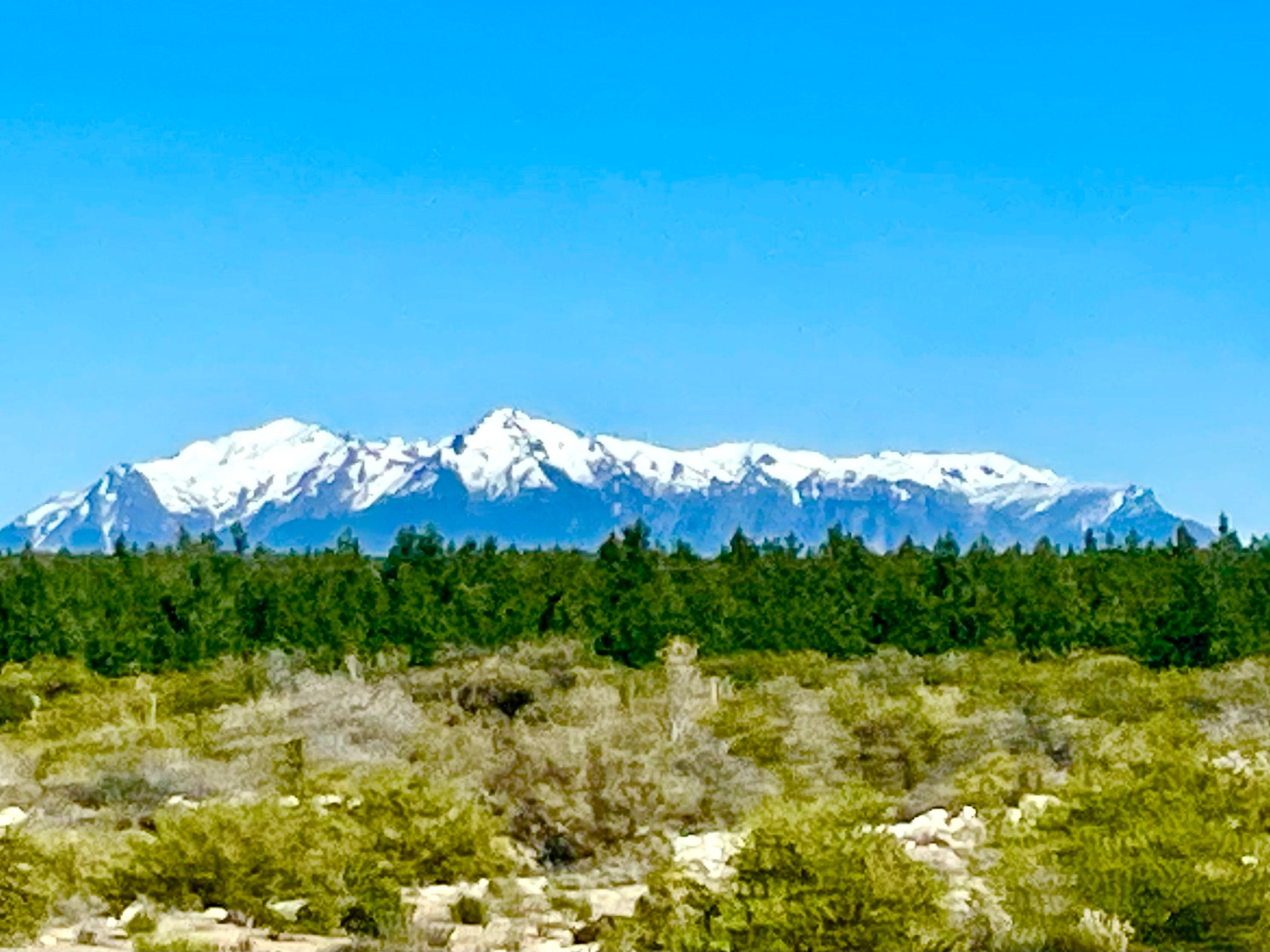
Argentina pulls you in, then pushes you away. For a country of its size, relative wealth and population, it’s almost impossible to believe that all of its roads could be so horrible. Driving anywhere constitutes a full contact sport.
The roads in Chile are either paved and good, with an occasional pothole, or unpaved (pretty much the entire Carretera Austral’s 850 miles) but almost always graded, though with fairly frequent washboard sections. They’re not perfect, but they’re predictable, and you know what you’re getting (into).
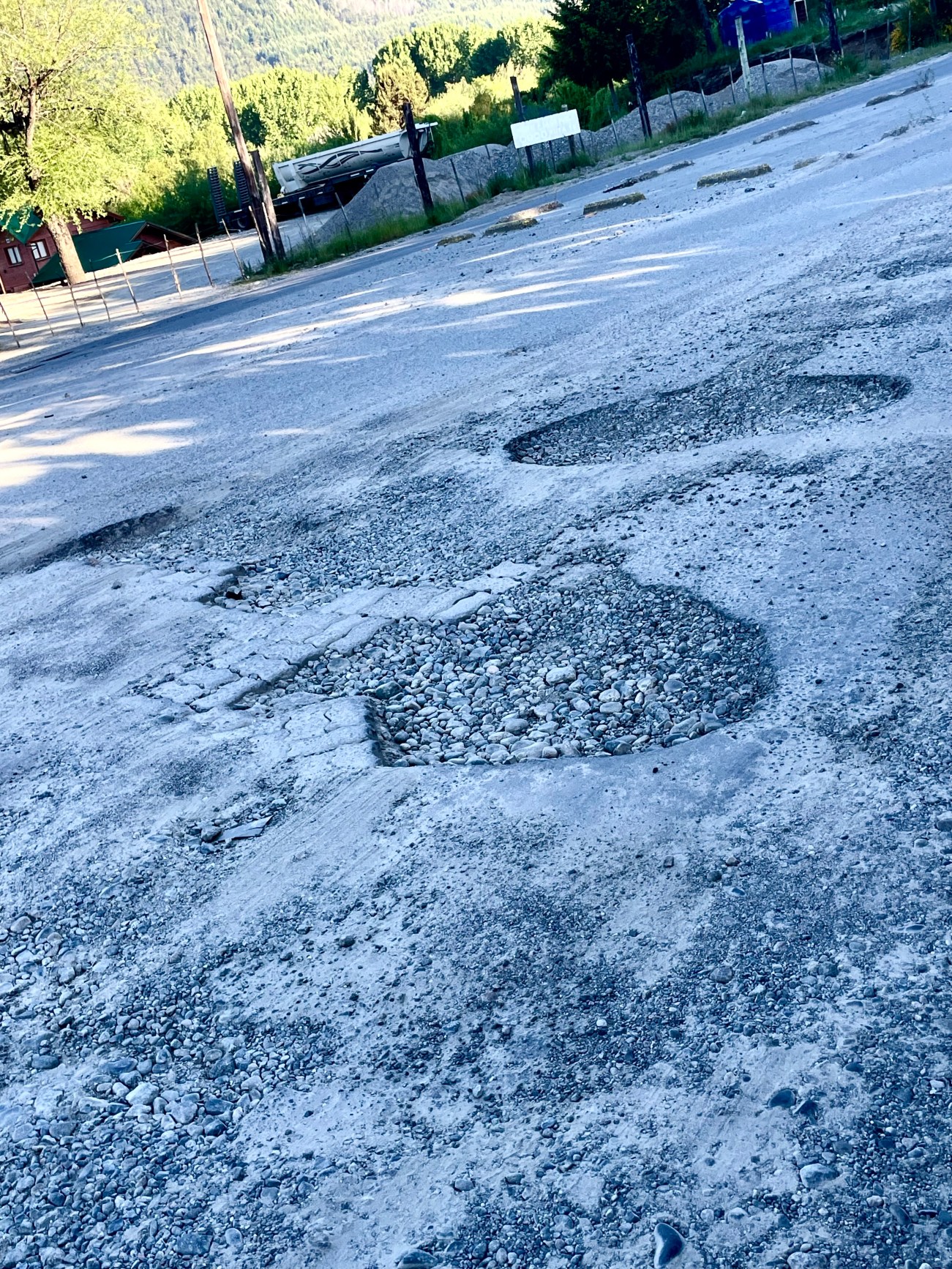
Those in Argentina are scary. Virtually all of them are completely unmaintained, with no warning or traffic signs, severely broken and buckled pavement, totally unpaved sections appearing out of nowhere that cause your vehicle and suspension to drop 6” and then slam upwards into compression mode at highway speed when the pavement suddenly reappears, and really deep potholes everywhere. You’re constantly weaving in and out of your lane (all the roads here are two lane), as are all the other vehicles, including semis barrellng towards you. Another surprise is huge – 8” high and 8’ – 10’ wide – speed bumps that appear randomly with no warning on open stretches and in towns – that rattle you and your vehicle in a particularly nasty way, especially when you didn’t see them until it was too late. It makes for exciting, but pretty darned scary, driving. You choose which potholes to hit because you can’t possibly avoid them all, or even most of them, and you’re continually surprised that the ones you intentionally chose to communicate with were 5” – 8” deep with sheer vertical edges despite appearing to be shallow and relatively harmless on the approach. After you hit them and your vehicle shakes as though it’s gonna come completely apart, you’re sure that you just blew a tire, trashed a wheel and/or left a major suspension component behind you. I’ve almost lost both 5 gallon auxiliary fuel cans (without which I’d have been dinner for lots of condors time and again) innumerable times despite their being strapped down tightly up top. What I’ve realized is that the top layer of asphalt is paper thin, making it very susceptible to all sorts of damage (most often I’d guess from the weight of big trucks). I’ve not seen one road repair crew -not one – since arriving here. Yikes. The places Argentine roads take you, however, are so spectacular that the trade is worth it, as long as you and your vehicle make it through the never ending gauntlet, able to continue onward to the next really cool place.
These were on the very small size, and they’re everywhere.
Gas stations in Argentina are wonderful. They’re community centers, restaurants (that serve coffee hours before any coffee shop or restaurant every morning), grocery stores and places to chill and recharge. They also have clean bathrooms and showers. The perfect adjunct to traveling in a camper.
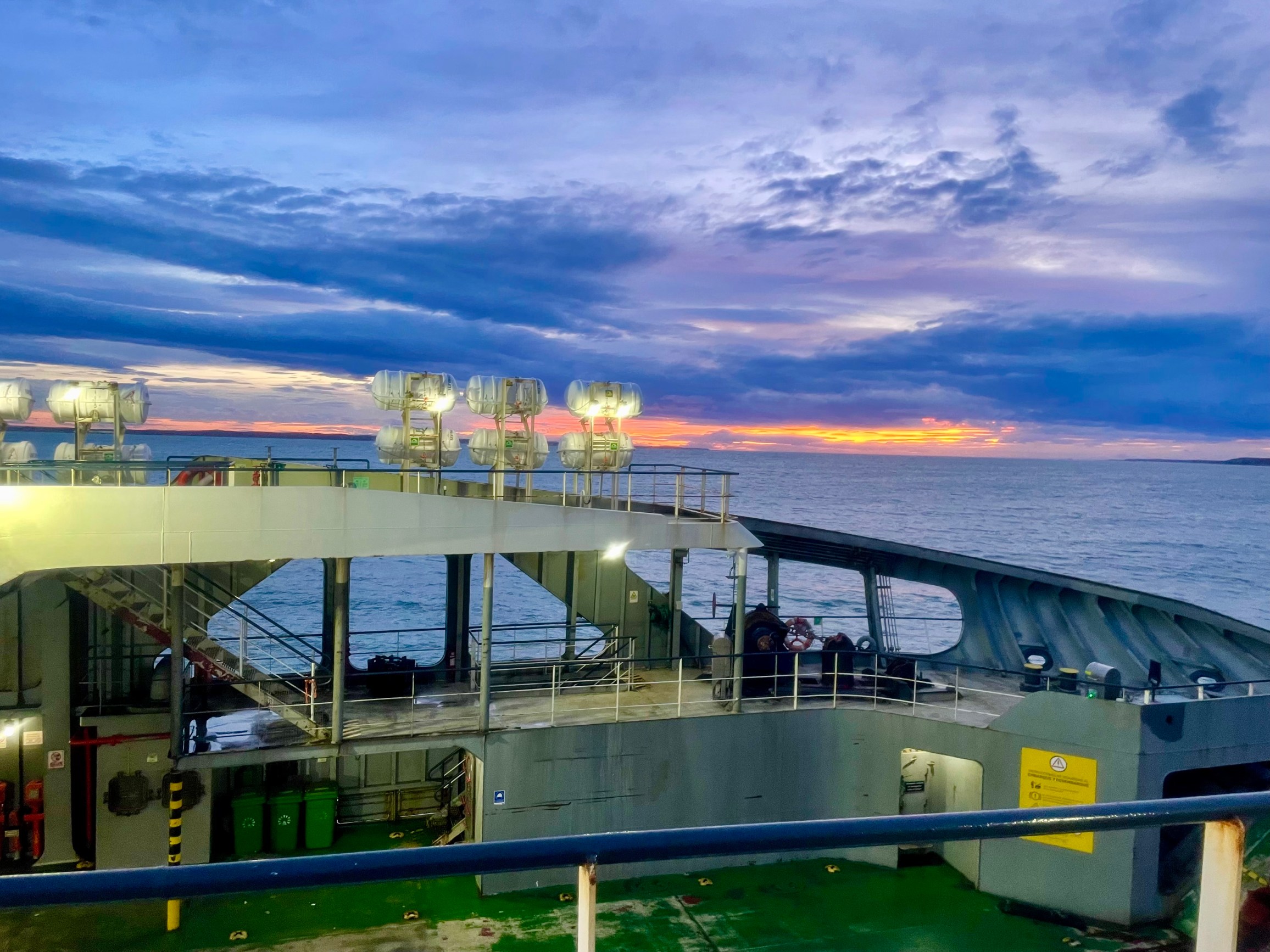
The ferry leaving Tierra del Fuego for the mainland:
OK – enough griping and unloading a screed. Ushuaia was unreal and surreal. It’s the end of the world that really and truly feels like it. It’s hard to explain why, but the terrain, utter ruggedness, ominous weather, ever present ocean views and sublime light all combine to create that vibe in an unmistakable way. Winter, at the end of November (equivalent to the end of May in the northern hemisphere), still has a pretty tenacious grip on things there. It feels like the (rest of the) world is really far away and it’s eminently possible that you just might not rejoin it.
After Ushuaia, and since I couldn’t go any farther south, I turned north, planning on tracing the eastern side of the Andes’ spine from south to north until crossing over back into Chile close to Santiago to head home. First I had to traverse the width of the country, however.
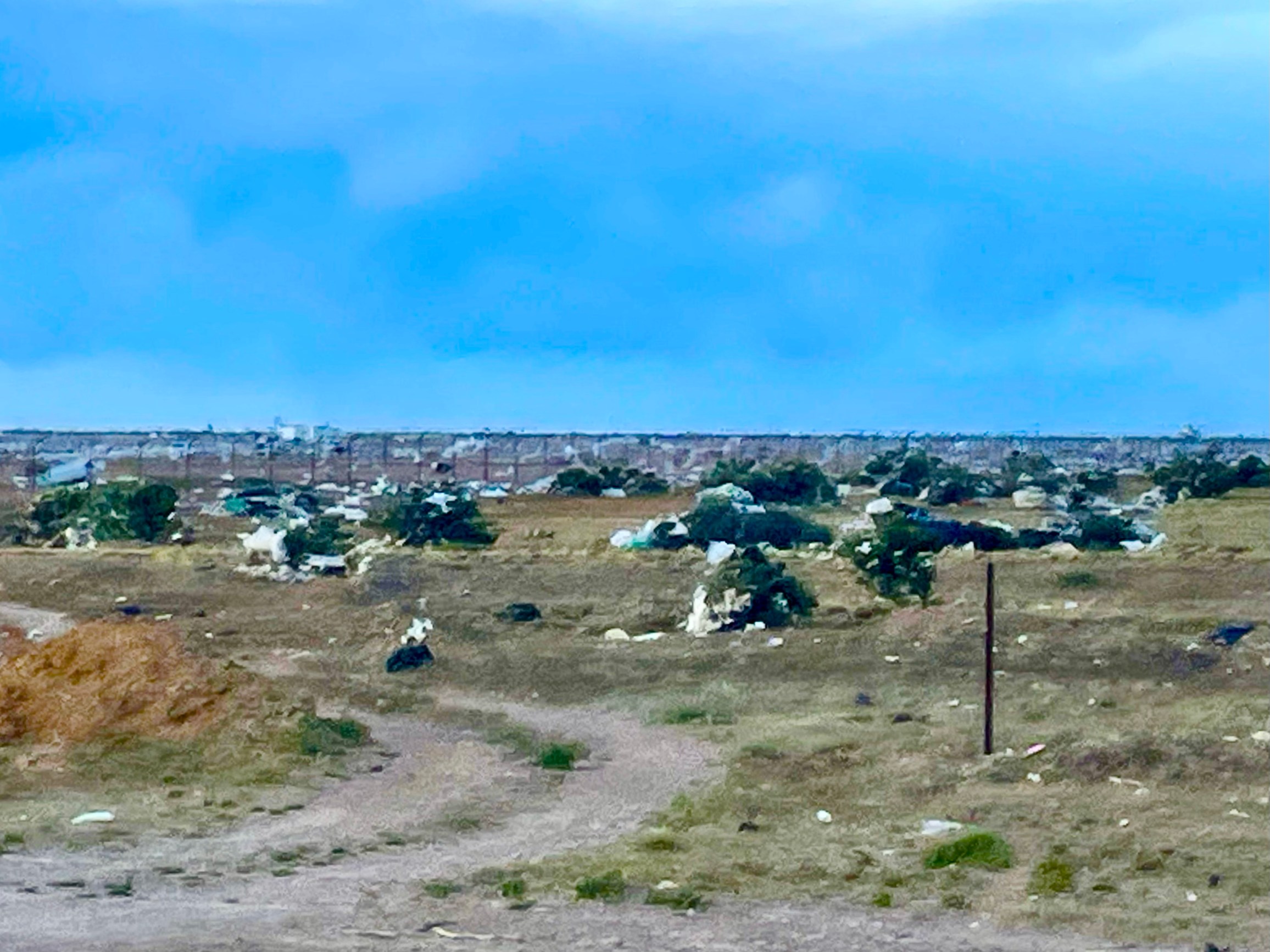
The distances have been huge. Getting from Ushuaia to where I just arrived, in El Bolson, took 1,260 miles of gnarly driving over two and a half days (something I could almost bang out in a day back home…). The expanses are huge, bleak, poor and uninspiring. I now understand why almost no one lives down there. Some of its towns are downright dystopian, with plastic trash strewn for miles in every direction, clinging tenaciously to the low green shrubs that manage to eke out an existence in the harsh wind and weather, flapping violently in the stiff breezes endlessly. Multiply this photo by 1,000 and you’ll get an idea of many of these outposts. It’s really sad – if everyone mobilized and spent a weekend (or several) together, it could all be removed. That they choose to leave it, scarring the landscape and making their own towns look completely forlorn and disgusting, is pretty disturbing to me. Perhaps it speaks to a collective sense of hopelessness…
The landscape slowly became more interesting as I traversed from the flat and featureless east, close to the Atlantic, to the rolling hills then mountains and valleys approaching the Andes. Late night fireworks:
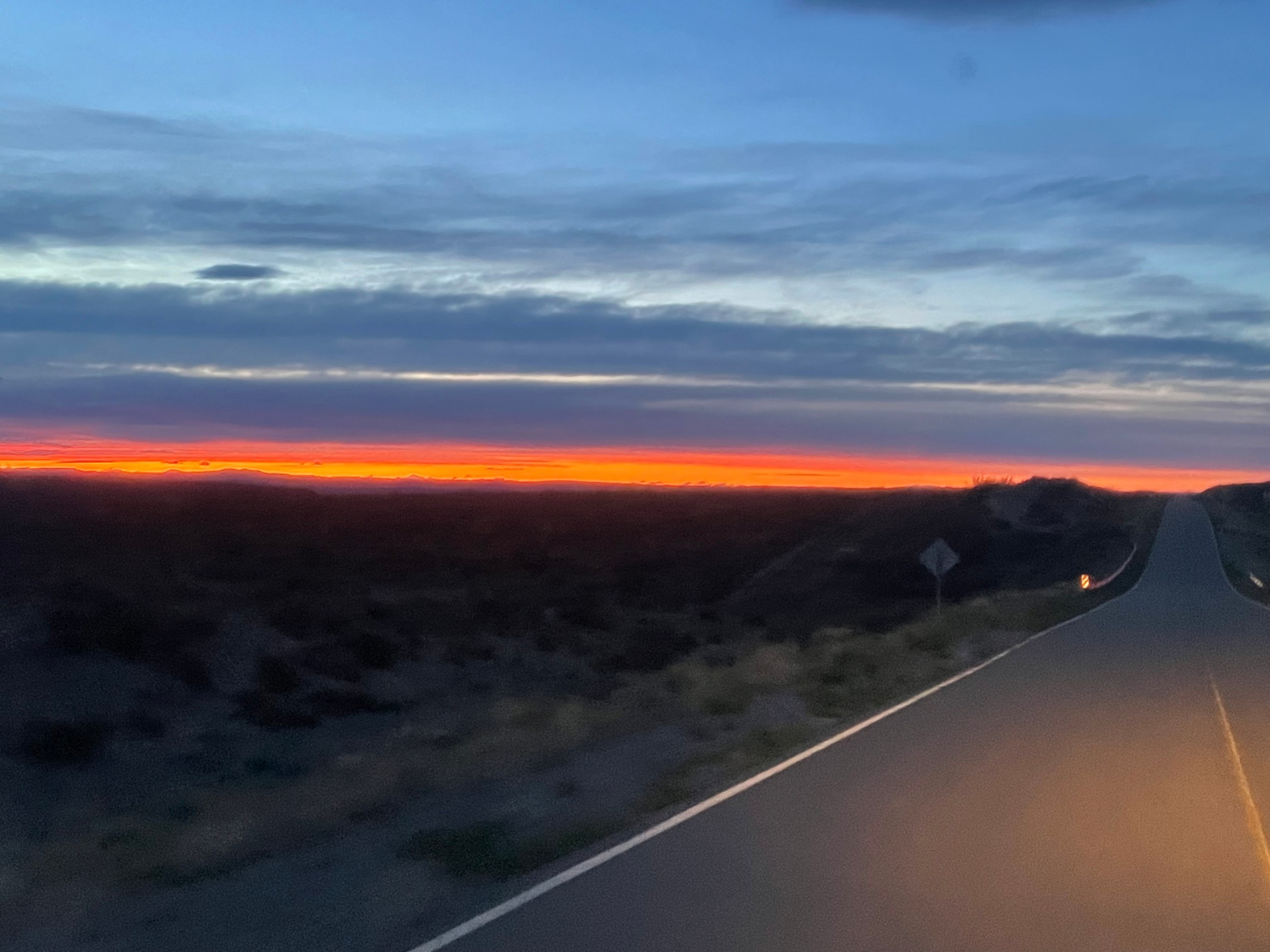
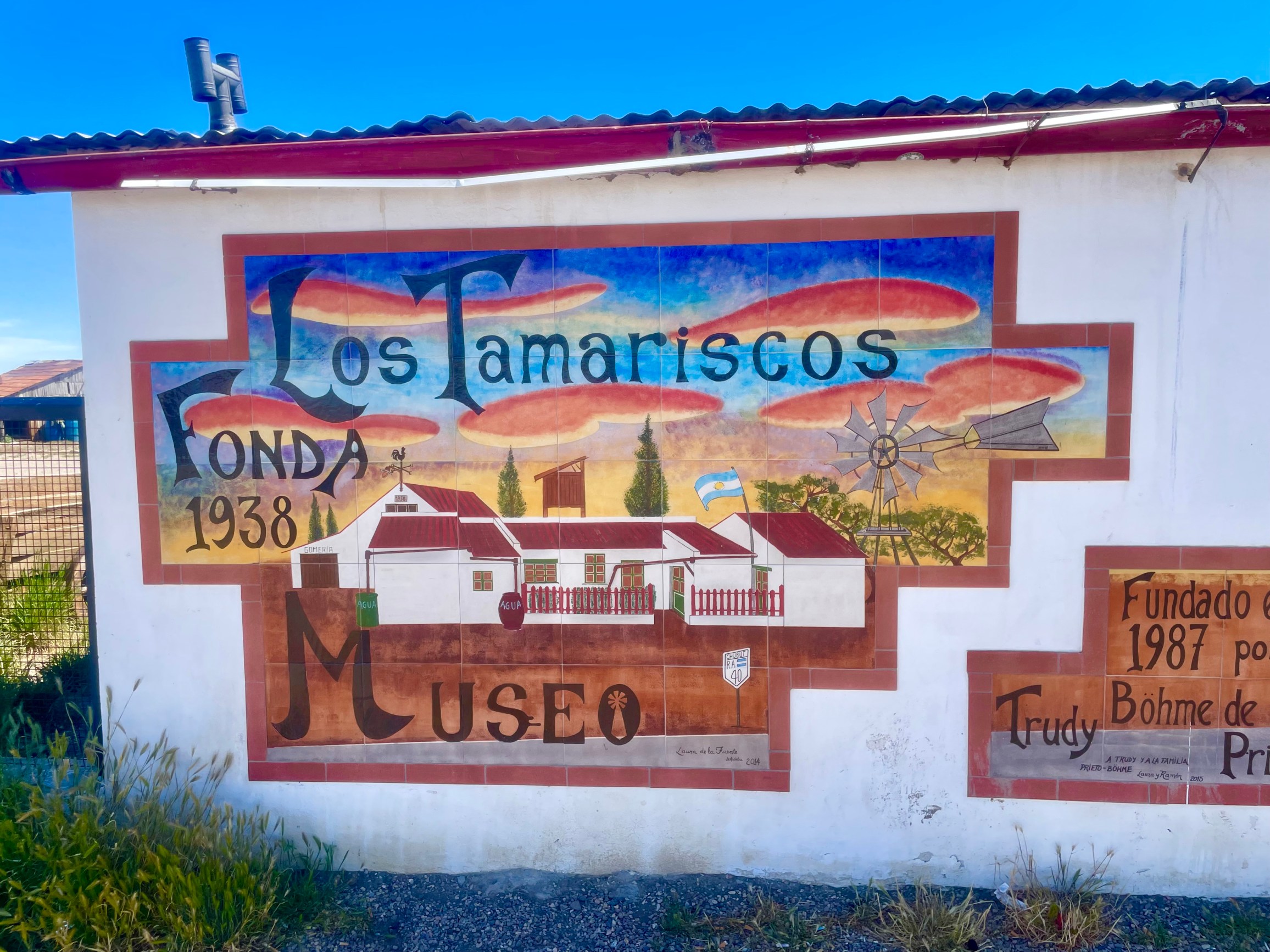
A roadhouse in the middle of nowhere:
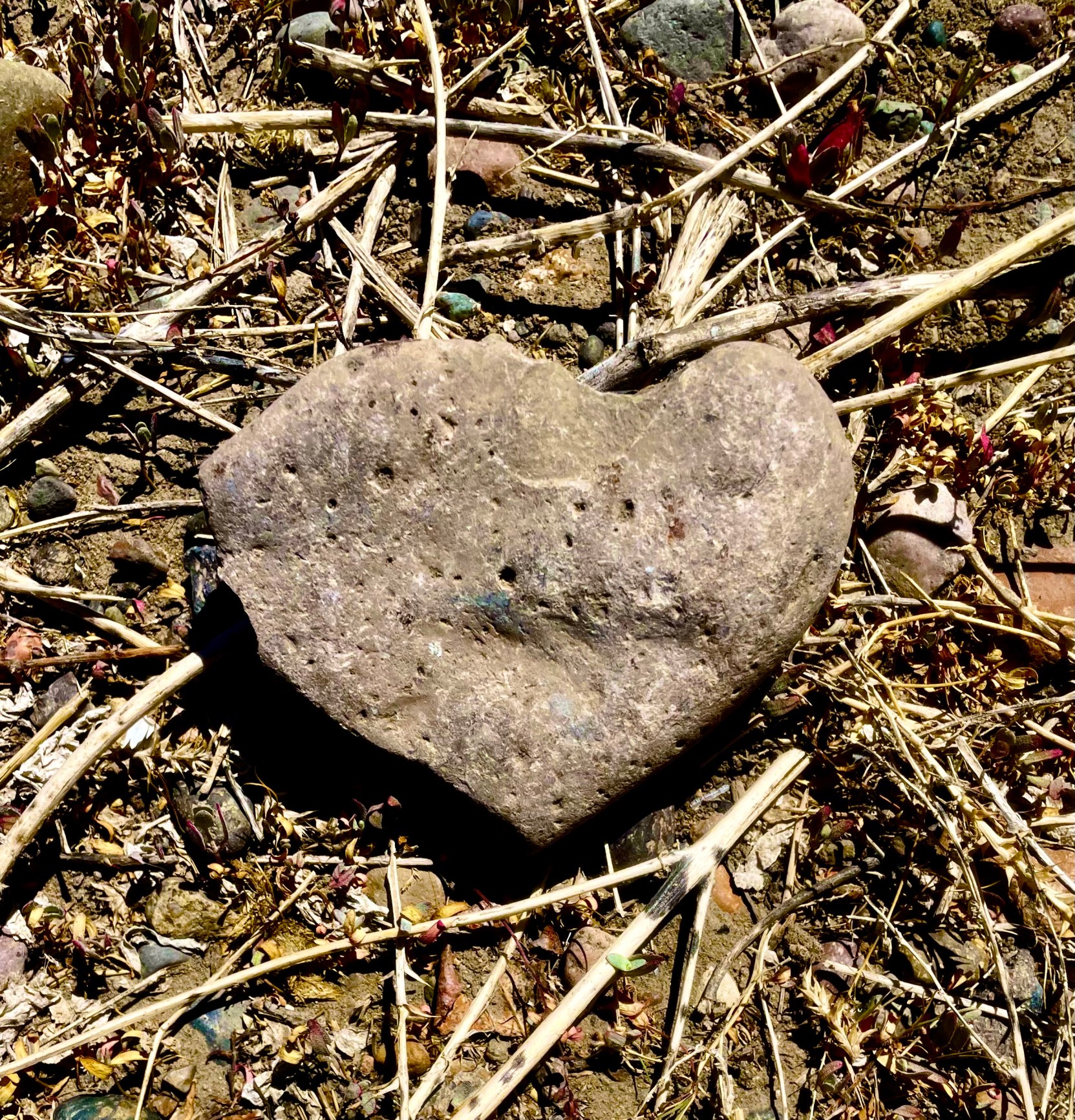
Love is everywhere…
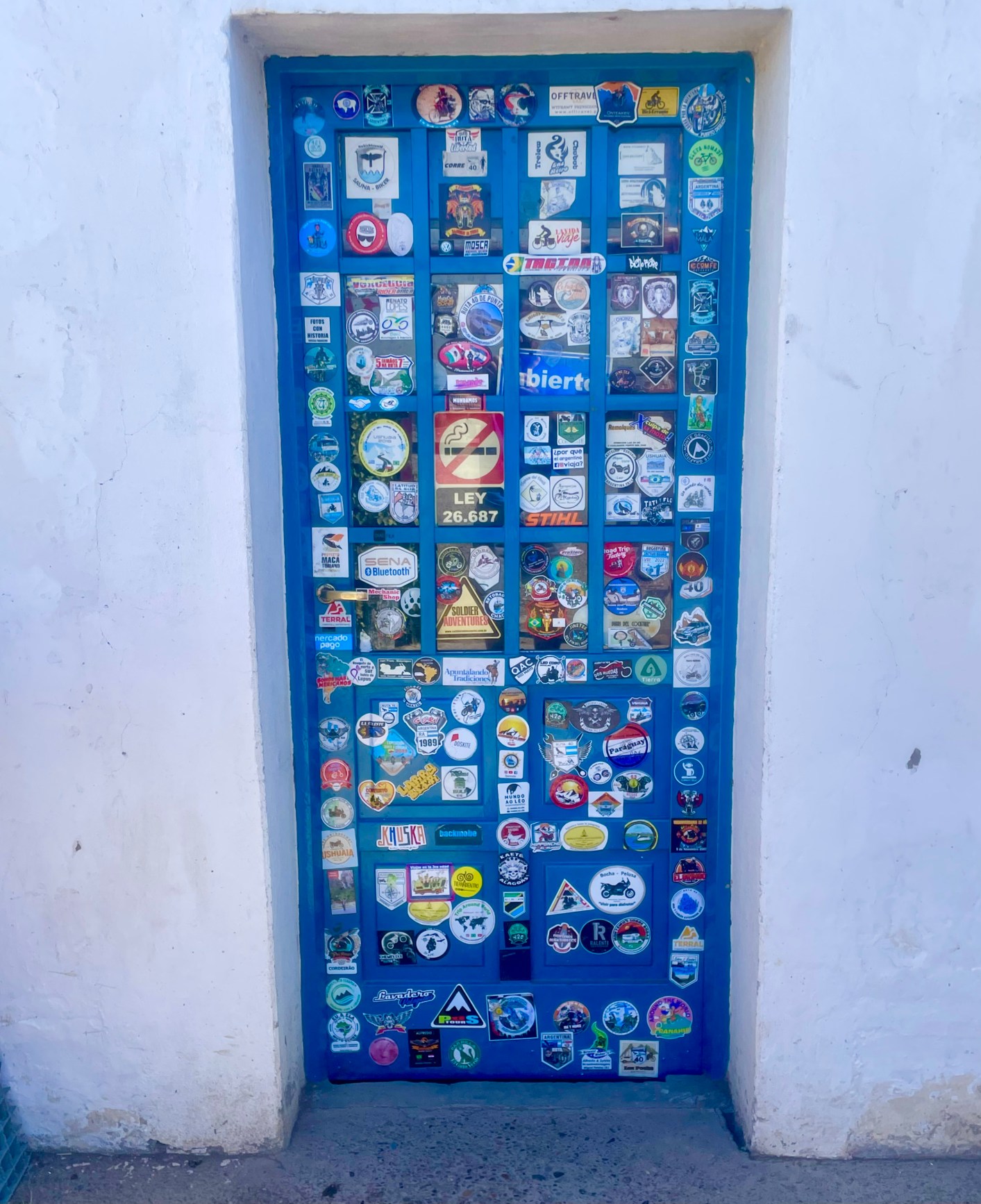
Kilroy was definitely here:
Perito Moreno, where I spent a night after a big push, is a charming big town / small city. I refueled, showered in an immaculate gas station bathroom (very common here), had breakfast and did some shopping. Esquel was my next stop, 200 miles north on Argentina’s famed (famed for what – destroying vehicles?) Ruta 40.
Gettin’ good north of Perito Moreno:

Esquel, a really cool mountain town that’s not yet on the social media / tourist radar:
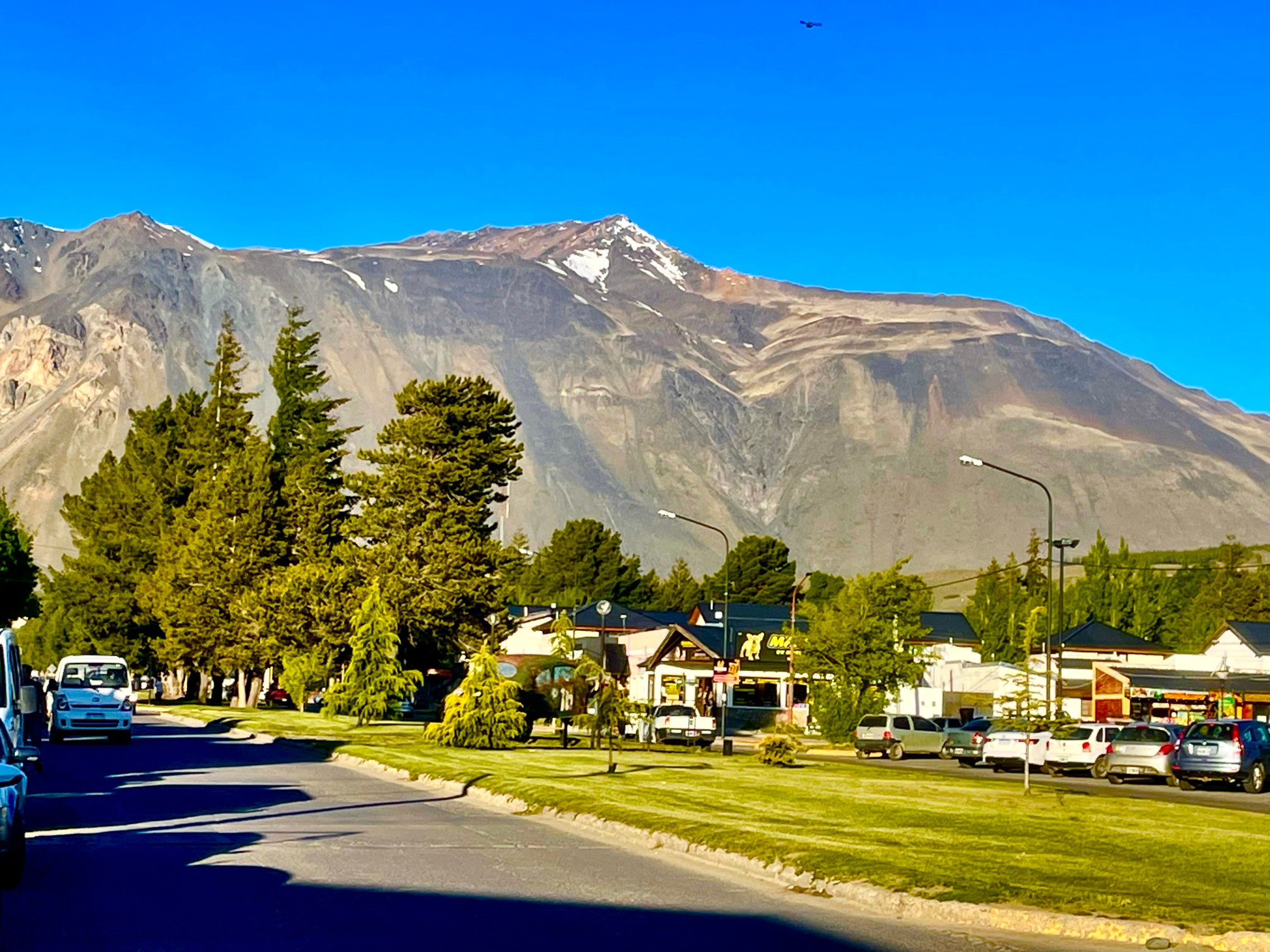
That was a big hill:
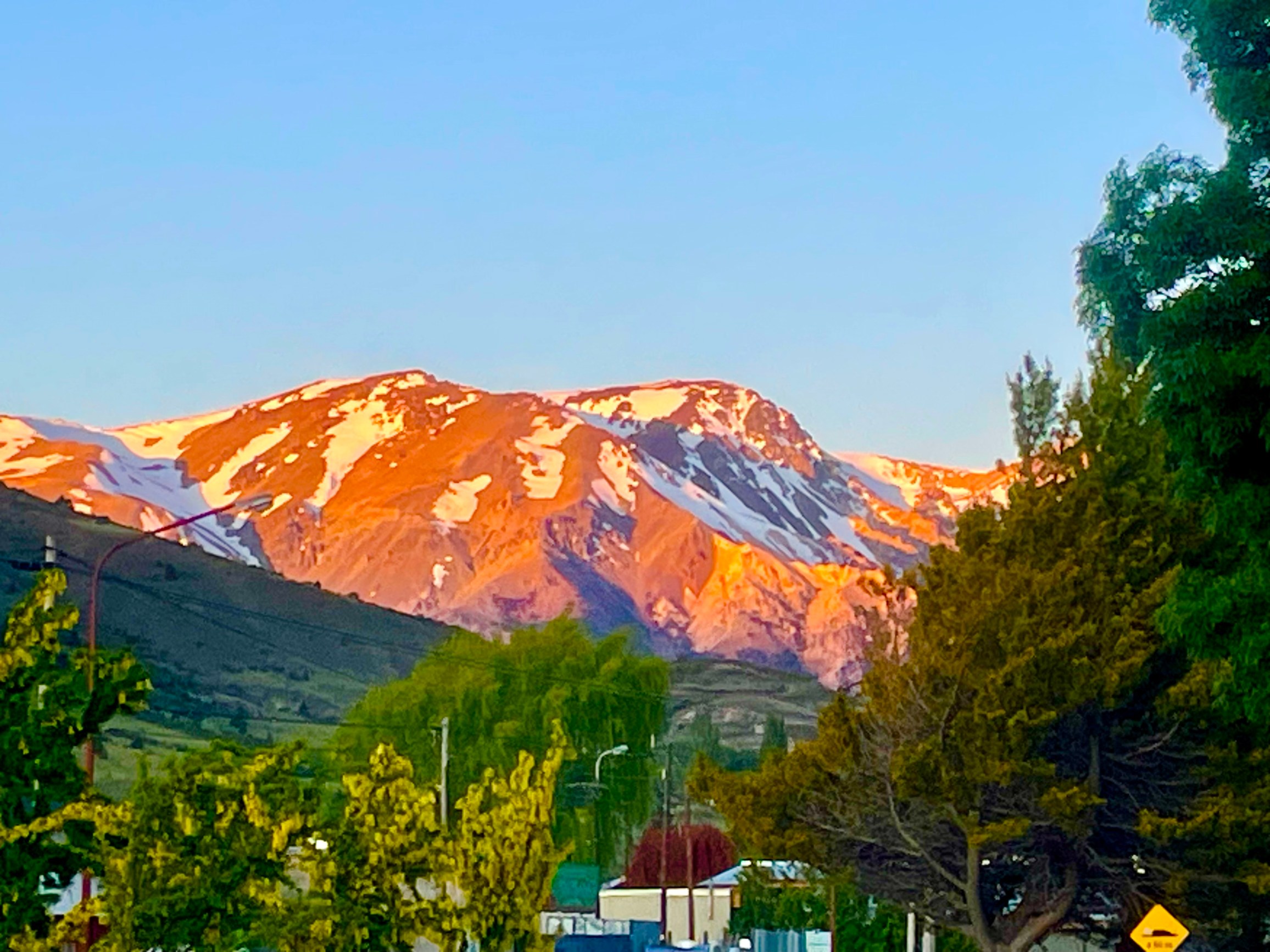

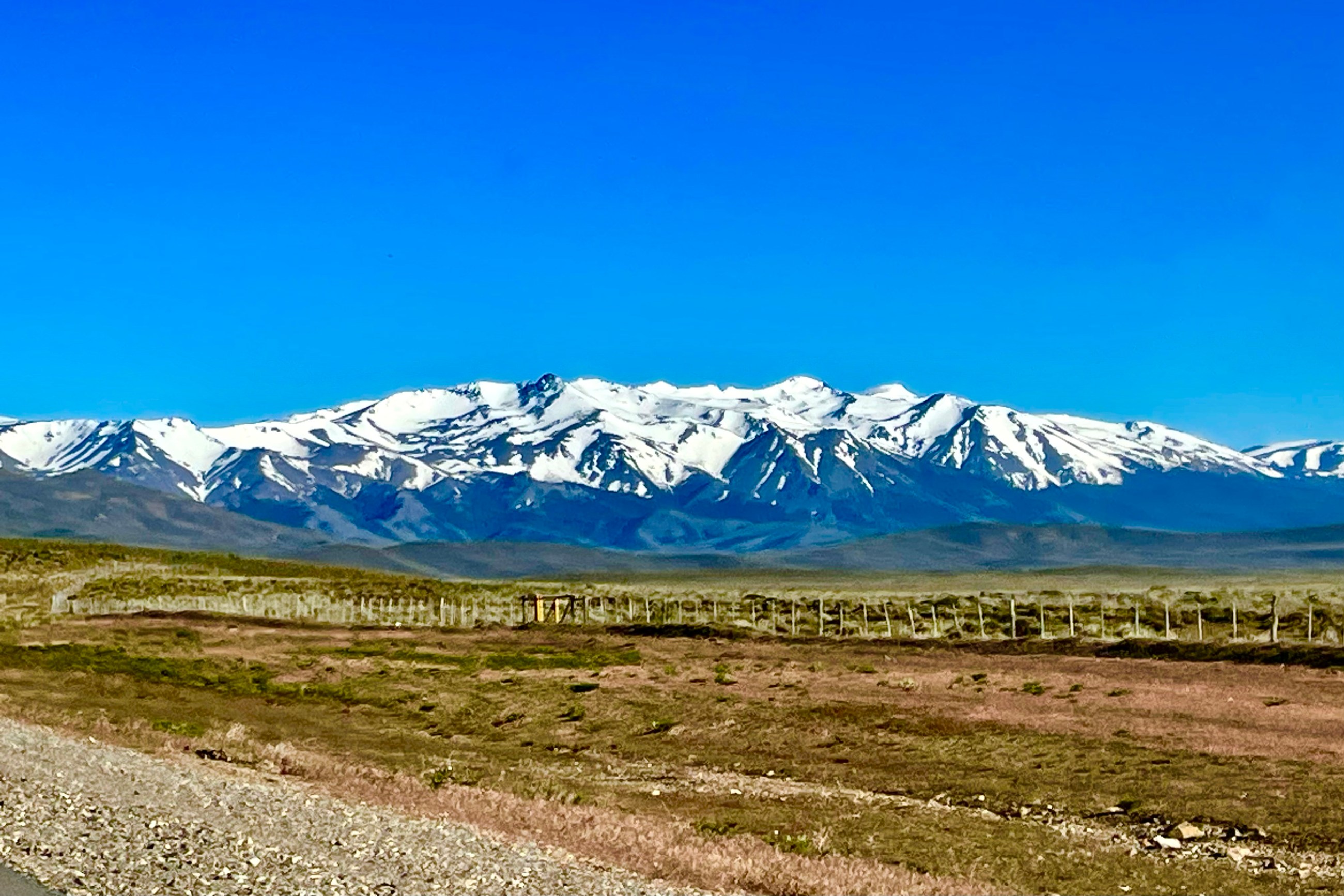
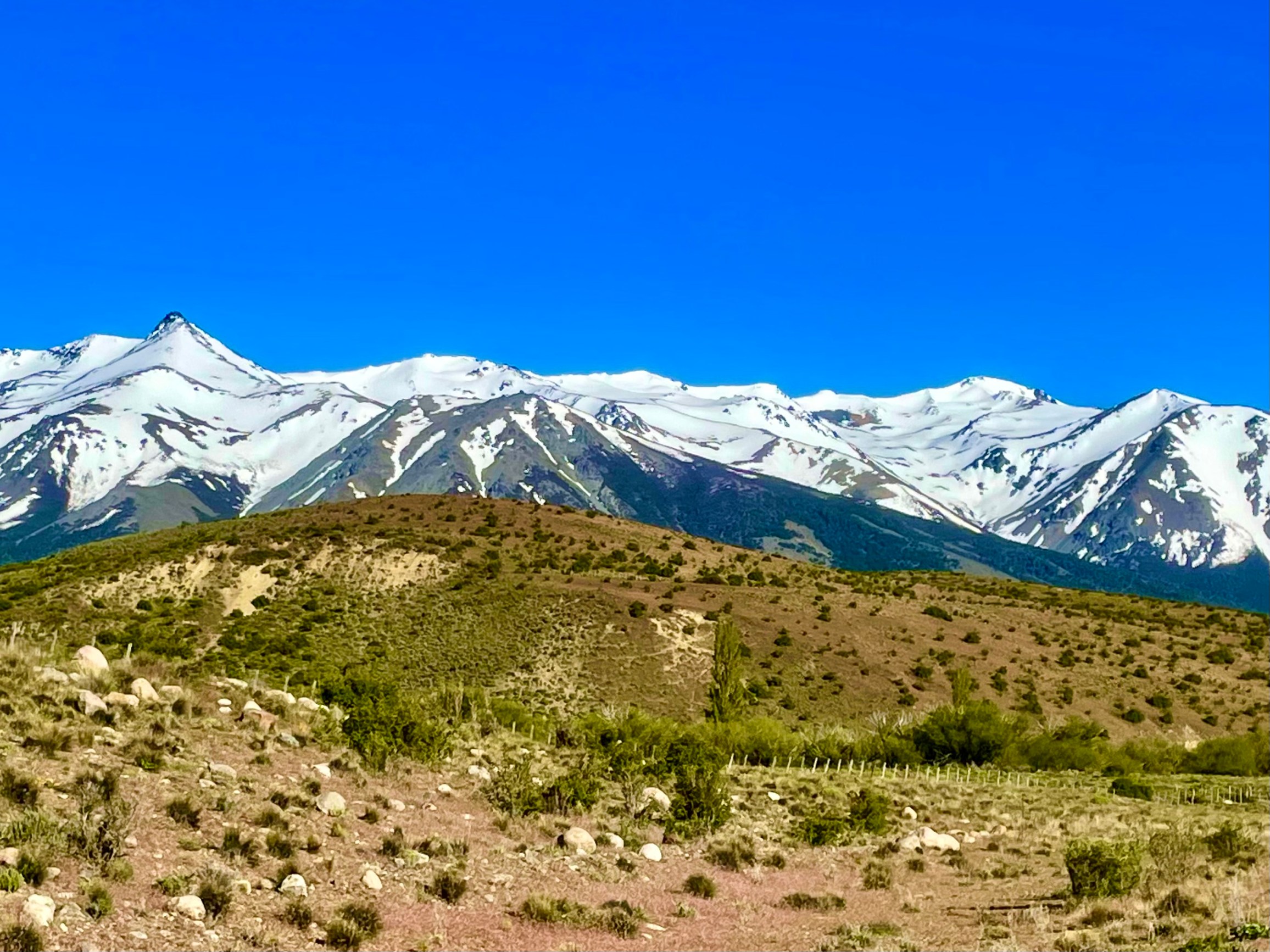
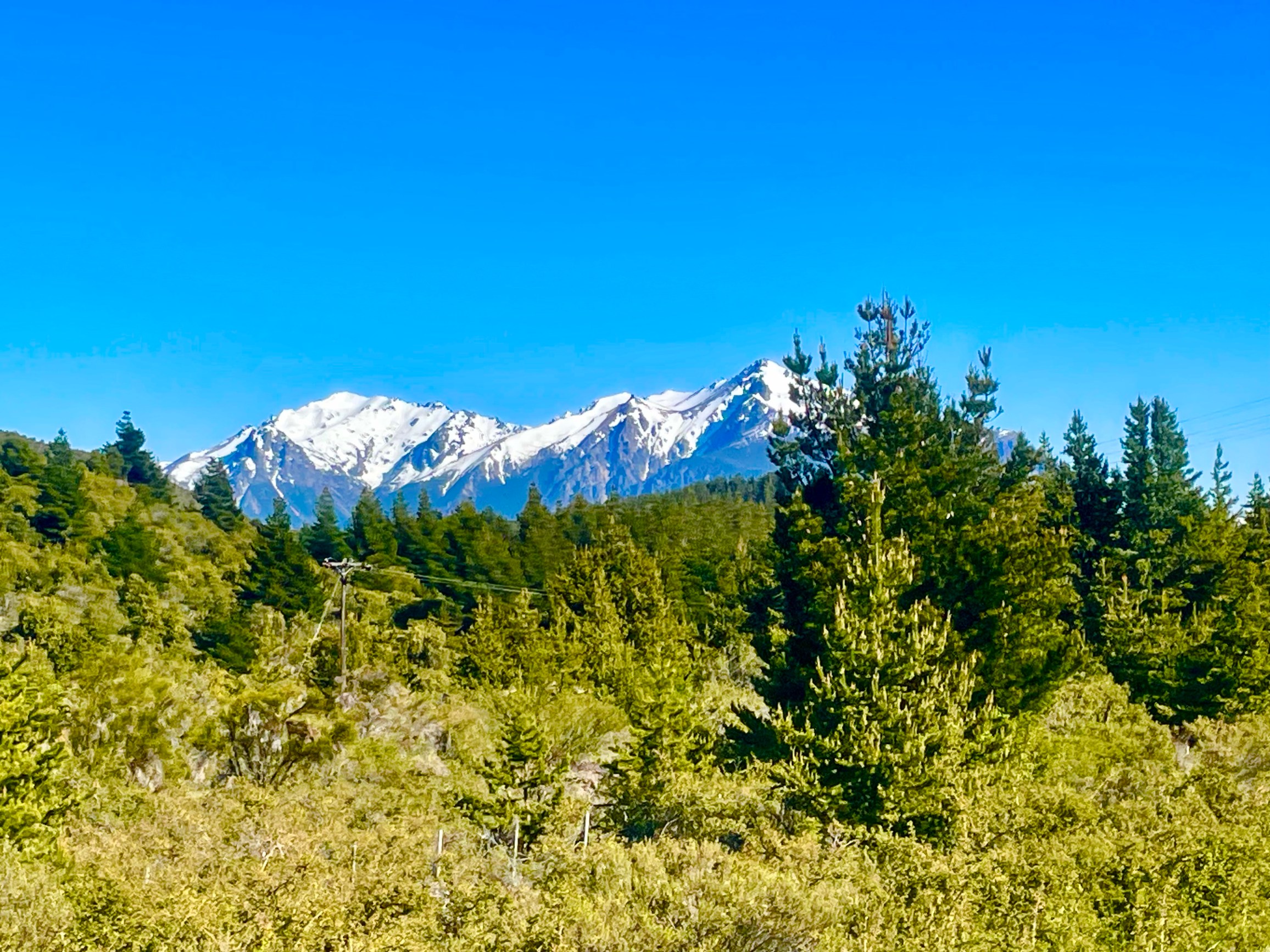
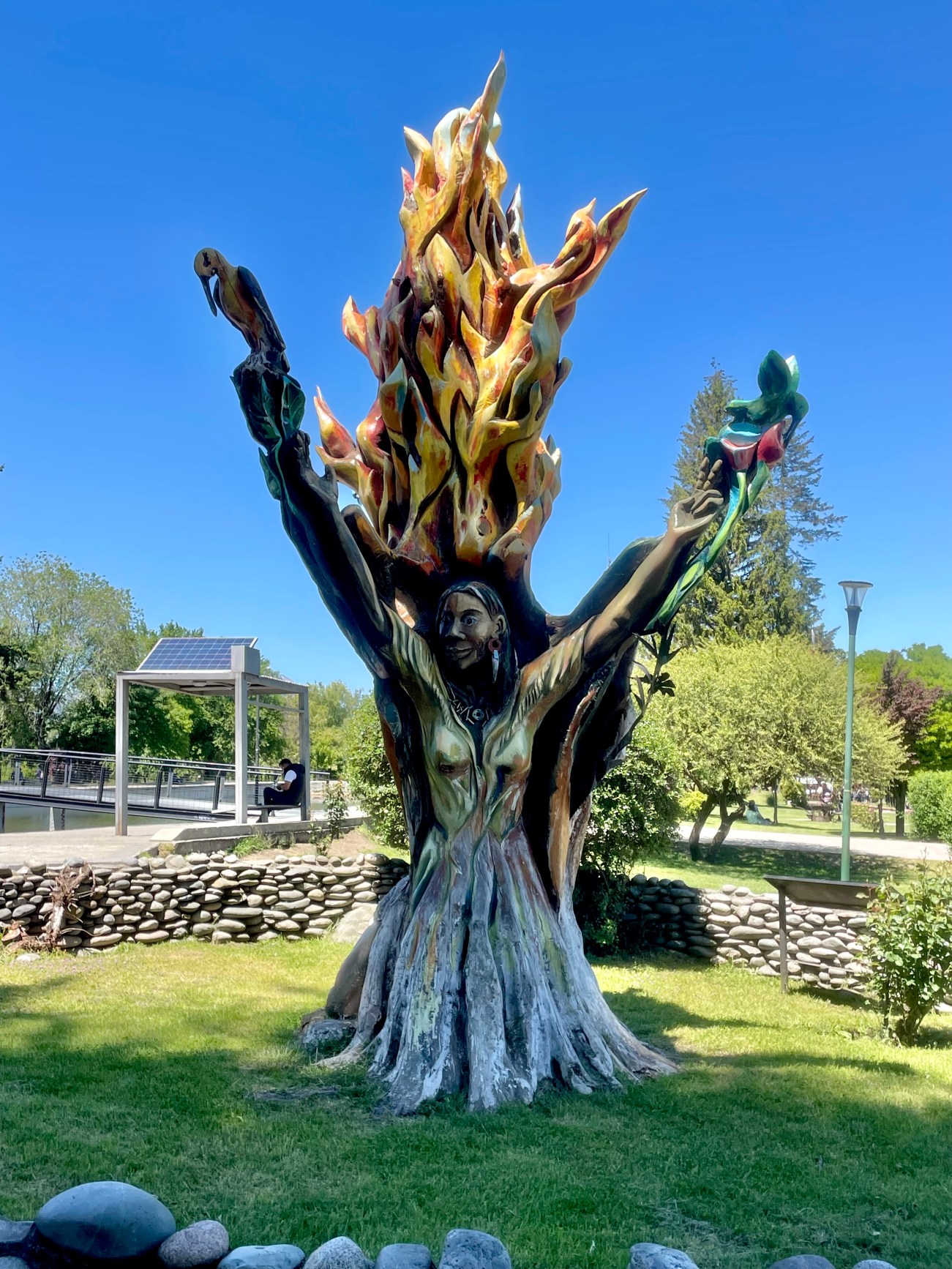
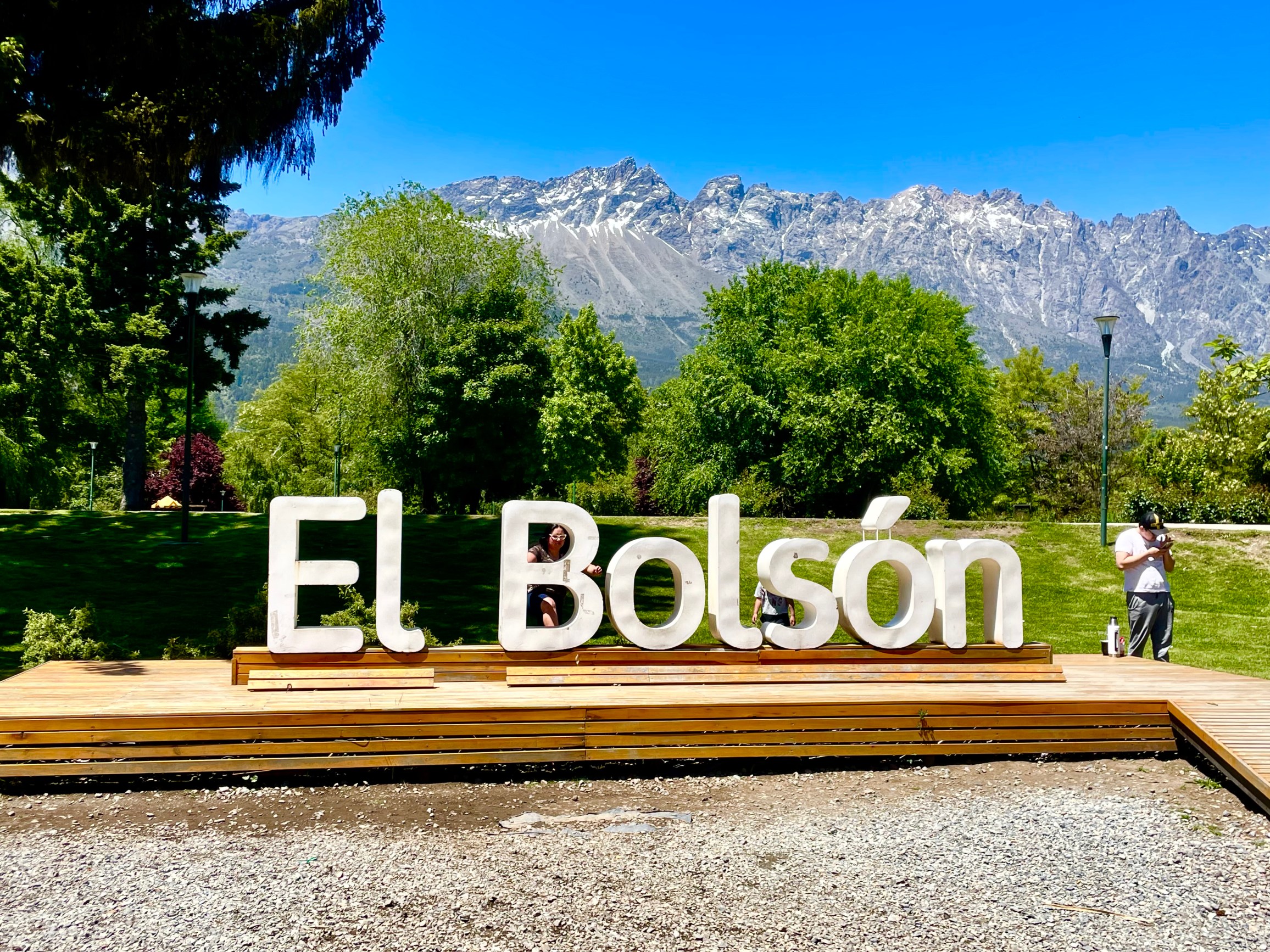
The drive between Esquel and El Bolsón was mind bendingly beautiful. El Bolson is pretty darned cool too. Apparently quite a few Americans have settled here to create a bit of a boomer hippie community. I guess the natural beauty, climate and cost of living have made it easy.
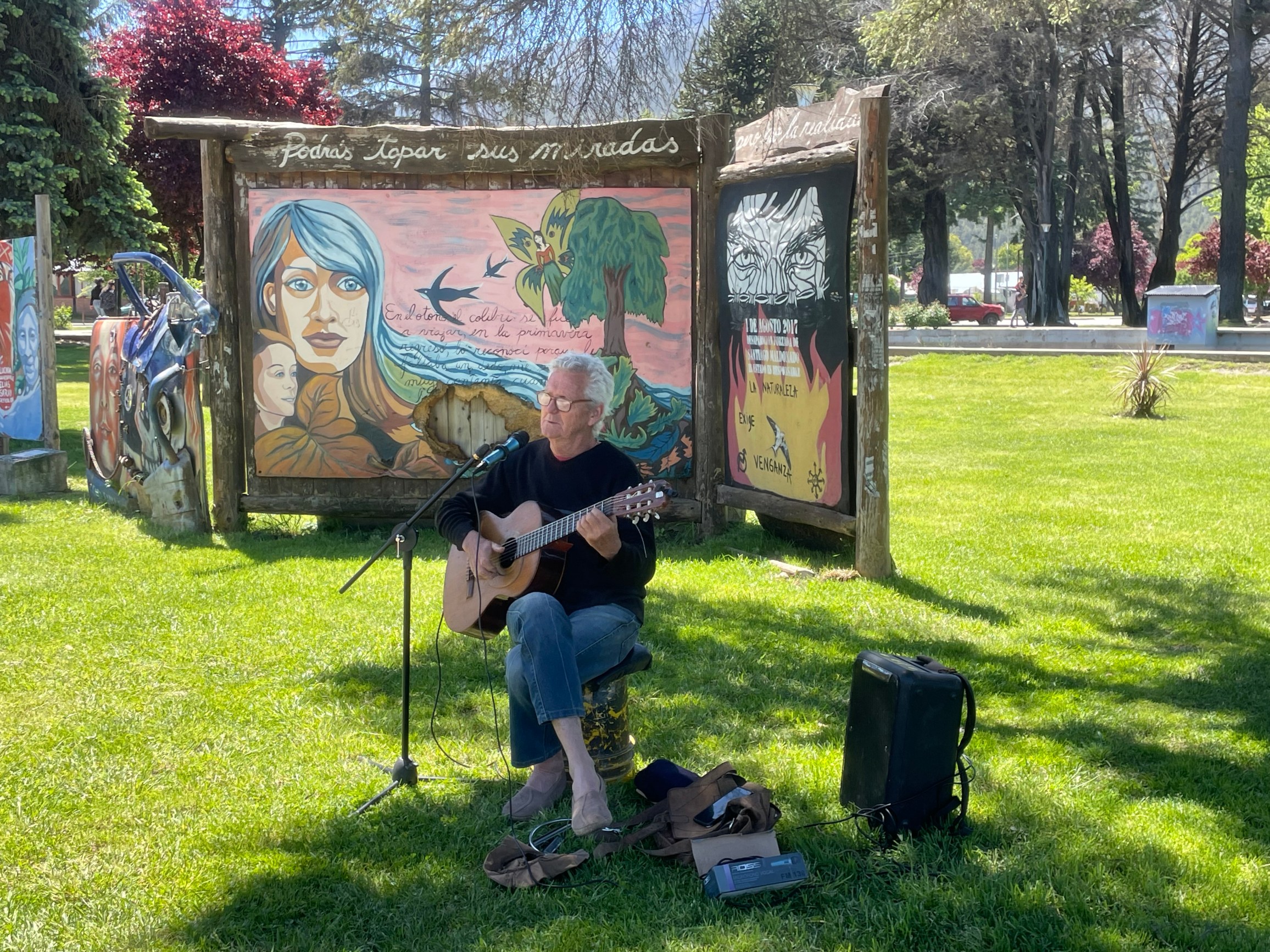
Local musical talent. He jammin….
An interesting fact here – the valleys are typically only 1,000’ – 2,000’ above sea level, but the peaks are huge. Verticals of 8,000’ to 10,000’ abound, so you feel as though you’re amidst giants, which you are.
I’ll be able to slow down quite a bit now, as the next 800 miles or so are filled with cool towns, lakes, mountain, glaciers and national parks and I have two and a half weeks left to see them. I’m hanging in El Bolson for a couple of days, having laundry done, restocking provisions and regrouping. After that I’ll hit the legendary Bariloche, The Seven Lakes, a bunch of national parks and finally, before re-entering Chile, Mendoza then Aconcagua – the tallest peak in the western hemisphere at 22,838′. That’s a big ‘un…
Off to trek – All Trails is amazing here – it has it all. Heading upwards now and will report back in a couple of days 🤟.
 Adventures Here......and There
Can’t believe the pictures. Almost seem unreal, and how outrageous to find a heart-shaped rock like the ones you collect. Yes, love is everywhere. Keep bringing us along – love my little vacation time away from the “real” world.
LikeLike
Quite the trek. Looks like beautiful territory. Might have expected them to print more Pesos to fix the roads.
LikeLike
Quite the trek! Beautiful territory! Might have expected th
LikeLike
Happy Trails to you and Happy Thanksgiving
LikeLike
Rich,
<
div>I commented
LikeLike